What Does Corporate Video Production Actually Cost in Melbourne?

If you’ve requested even a handful of video production quotes in Melbourne, you’ll know the range can be bewildering. Three quotes for the same brief can come back at $4,000, $12,000 and $28,000 with no clear explanation of why. Here’s an attempt to make that make sense.
We’ve been producing corporate video in Melbourne for over 20 years and the question we get asked most is simple: what does it actually cost? Here’s a straightforward breakdown of corporate video production cost in Melbourne, what drives it, what typical projects land at, and where budgets tend to leak when things aren’t planned properly.
Why the Range is So Wide
The honest answer is that “corporate video” is an umbrella term covering an enormous range of work. A single-camera talking head filmed in your boardroom is a fundamentally different product to a scripted brand film shot across multiple Melbourne locations with professional talent, a crew of six, drone footage, and motion graphics. Treating these as the same product category is like asking how much a marketing campaign costs.
The real cost drivers are:
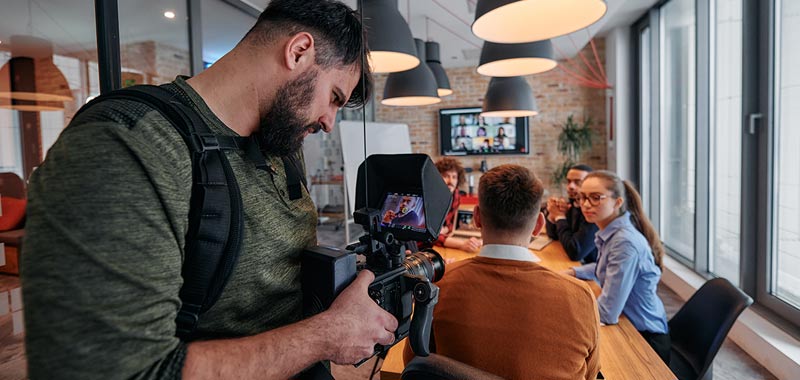
Crew size and day rates. A Melbourne-based video production crew typically starts at a director/operator and a sound recordist. Add a producer, a dedicated camera operator, a lighting technician, and a production assistant and your single shoot day cost escalates quickly. Each person on set is a skilled tradesperson with expensive equipment, and day rates in Melbourne reflect that.
Pre-production. This is the stage most clients underestimate, and the one that separates good productions from mediocre ones. Scripting, storyboarding, location scouting, talent briefing, run-sheet preparation. Done properly, pre-production reduces shoot day costs and editing time significantly. Skimping here costs you more in the end.
Shoot days. In Melbourne, a crew day typically runs 8 to 10 hours. If your brief requires two locations, multiple interview setups, and B-roll across the city, you’re looking at at least two shoot days. The maths adds up quickly.
Post-production. Editing, colour grading, sound mixing, motion graphics, music licensing. A polished three-minute corporate video typically requires 15 to 30 hours of post-production time minimum. Add animated graphics or significant visual effects and that number grows.
Talent. If you’re using professional on-camera talent rather than staff, expect to pay union rates. A professional presenter in Melbourne for a half-day shoot adds meaningfully to the budget but often makes an enormous difference to the final product.
What Corporate Video Actually Costs in Melbourne
These are genuine ranges based on production work in the Melbourne market, not back-of-the-envelope estimates:
Entry-level corporate video ($2,000 to $6,000). Single location, minimal crew, one to two interview subjects, basic B-roll, straightforward edit. Suitable for an internal communications piece, a simple staff profile, or a basic explainer. This is not the bracket for a client-facing brand film.
Mid-range corporate production ($7,000 to $18,000). This is the sweet spot for most Melbourne businesses commissioning a genuine marketing or communications asset. Two to three shoot days, a full crew, professional grade footage, proper editing with colour grade and licensed music. At this level you’re producing something you’d be comfortable putting on your homepage or running as paid media.
High-end production ($20,000 and above). Full scripted productions, professional talent, multiple locations, complex post-production including motion graphics or animation, broadcast-quality deliverables. Think television commercial territory, large-scale case study campaigns, or flagship brand films for significant organisations.
The Variables That Move the Needle Most
Beyond the obvious inputs, a few things consistently push costs up or down:
How prepared you are going in. Productions where the client arrives with a clear brief, approved messaging, identified interview subjects, and confirmed locations run faster and cheaper. Productions where this gets worked out on the fly cost more in shoot time and editing revisions.
Revisions. Most production companies quote for a defined number of edit rounds. Each additional round of feedback costs time. Consolidating feedback internally before sending it to your production company sounds obvious but makes a genuine difference to your final invoice.
Music licensing. This one surprises people. Properly licensed music for a commercial video is not free. Stock library licences start from around $50 and go up significantly for premium tracks. If you have aspirations toward a specific piece of music, get the licensing cost confirmed before you fall in love with it.
Deliverable formats. A single master cut is straightforward. If you need landscape, square, and vertical cuts for different platforms, each cut adds editing time. If you need subtitles, captioned versions, or international variants, factor this in upfront.
Getting the Most From Your Budget
The single biggest predictor of a smooth, on-budget production is how prepared the client is before the camera rolls. In our experience, the projects that run over time and over budget share a common pattern: key decisions that should have been made in pre-production get made on shoot day instead, where they cost significantly more to resolve.
The clients who get the most from their investment tend to arrive with confirmed interview subjects, approved key messages, and a clear view of where the finished video will actually live. Not because we require it, but because it means shoot days move faster, editing is more focused, and the final product does what it was supposed to do.
When you’re comparing quotes, look at what’s included in pre-production, how revision rounds are handled, who owns the footage, and what the realistic turnaround is. A lower quote that excludes scripting or caps you at one round of revisions can end up costing more in time and frustration than a comprehensive one would have.
If you’d like a straight conversation about what a realistic budget looks like for your specific brief, we’re easy to reach and happy to talk it through before you commit to anything.